So you’re thinking about National Board Certification. Or maybe you’ve already committed (bravo!), but now you’re staring at the four components wondering where to even begin.
Let’s be honest—it can feel overwhelming at first. The terminology, the rubrics, the portfolio entries, the deadlines—it’s a lot.
But here’s the good news:
You don’t have to figure it all out at once. You just have to take it one piece at a time.
In this post, we’re going to break it all down—plain and simple. Whether you’re still deciding or you’re knee-deep in drafts, this is your go-to guide to understanding what National Board Certification really involves, and how you can approach it without losing your mind (or your love for teaching).
First, What Is National Board Certification?
National Board Certification is an advanced teaching credential that goes beyond state licensure. It’s a voluntary, rigorous process that helps you grow professionally and demonstrate your expertise in the classroom.
It’s grounded in five core propositions about what accomplished teachers should know and do. These aren’t fluff—they’re practical, student-centered, and rooted in reflection and continuous growth.
The Four Components (Broken Down)
Let’s dive into the parts. Each of the four components focuses on a different aspect of your teaching. You can complete them all in one year or spread them out over three years.
Component 1: Content Knowledge
- What it is: A computer-based assessment that tests your understanding of your subject area and teaching practices.
- What you do: You’ll schedule this test at a testing center. It includes constructed-response questions and selected-response items.
- Tips: This isn’t about remembering random trivia. It’s about applying your knowledge to real teaching scenarios. Think: “How would I support a student struggling with this concept?”
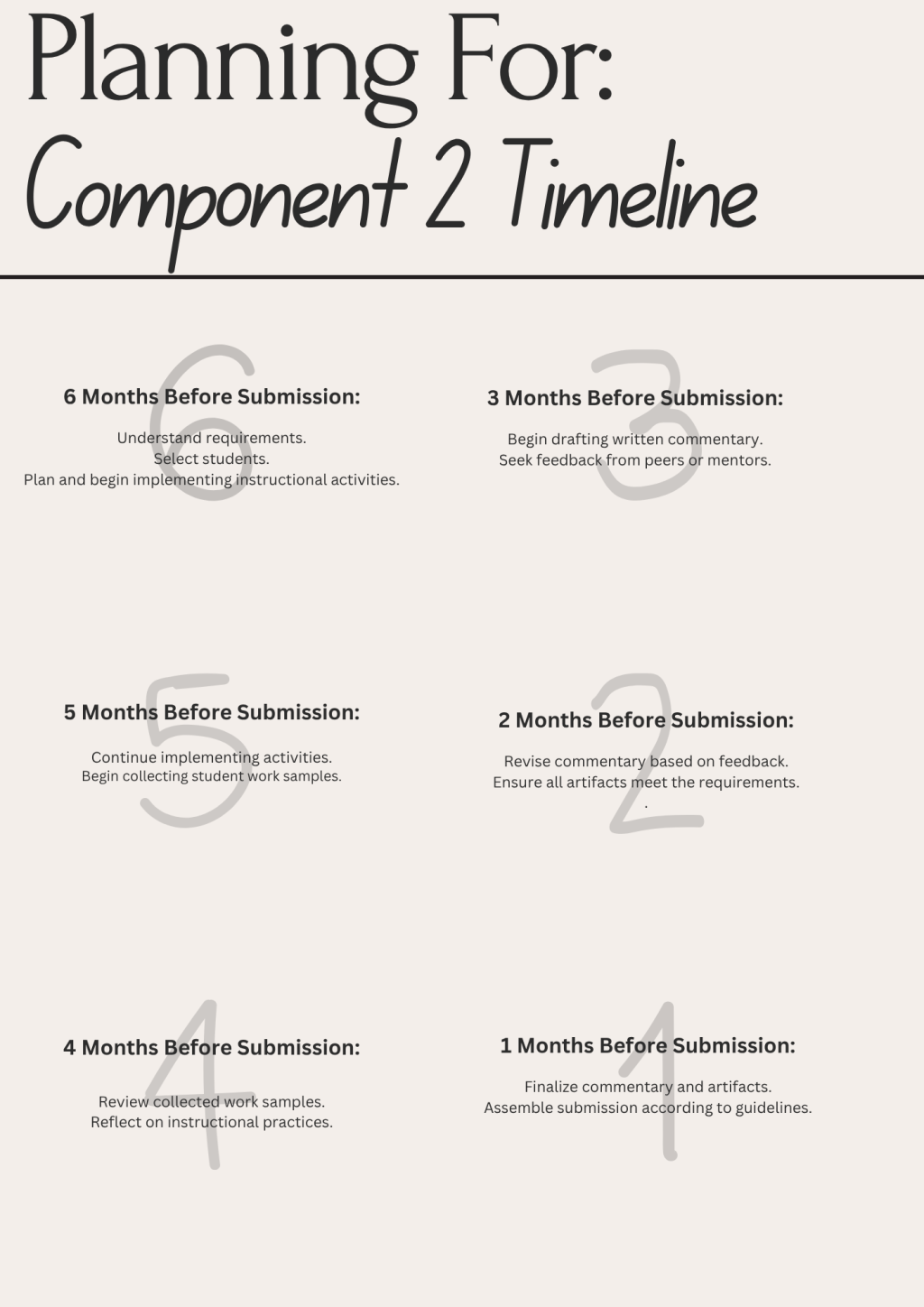
Component 2: Differentiation in Instruction
- What it is: A written portfolio entry focused on how you meet individual learning needs.
- What you do: Choose a group of students, provide work samples, and explain how you differentiated instruction to support each one.
- Tips: Use real student work. Reflect honestly. This is about how you respond to diverse learners—not showcasing Pinterest-perfect lessons.
Component 3: Teaching Practice and Learning Environment
- What it is: A portfolio entry with video evidence and written commentary about your instruction and classroom environment.
- What you do: Record 2 video segments (total of 20 minutes max), submit them with written reflection, and show how you engage students and create a positive, productive learning space.
- Tips: Don’t aim for “perfect” lessons—choose clips that show real interaction and student thinking. Think about equity, engagement, and responsiveness.
Component 4: Effective and Reflective Practitioner
- What it is: A portfolio entry highlighting your growth, collaboration, and leadership beyond the classroom.
- What you do: Share evidence of your professional learning, contributions to student success, and collaboration with colleagues or families.
- Tips: This is where all the behind-the-scenes work matters—PD sessions you led, committees you served on, strategies you implemented to improve learning outcomes.
How Long Does It Take?
You can complete all four components in one year, but many teachers choose to spread it out over two or three years—and that’s completely okay. The process is flexible by design, so you can move at the pace that works best for you, your workload, and your life.
Pro tip: Make a timeline. Even if it changes, having a plan helps you stay on track and reduces last-minute stress.
What You Don’t Need
- Perfection
This isn’t about flawless videos or ideal test scores. It’s about impact and intentionality. - Fancy technology
A basic camera or phone works fine for video. It’s your teaching, not your editing skills, that matter. - A new version of yourself
Don’t try to become someone else. Reflect on who you are as a teacher and why you make the choices you do.
What You Do Need
- Time and structure
Block out planning, writing, and reflection time. Even one hour a week adds up. - Support system
Find a cohort, mentor, or friend who’s certified. Ask questions, share drafts, and vent when you need to. - Confidence in progress over perfection
The magic happens when you start to see your practice more clearly—not when everything looks polished.
You Can Do This
I know this process can feel like a mountain. But mountains are climbed one step at a time. And with every component, you’ll grow—not just as a teacher, but as a thinker, learner, and leader.
This isn’t just a test of knowledge. It’s a journey of professional self-discovery. It’s a chance to recognize and own your strengths, challenge yourself with purpose, and show up more confidently for your students.
So take a breath. You’ve got this.
Let’s break it down.
Let’s take it step by step.
And let’s walk this path with courage, clarity, and community.
Have questions? Drop them in the comments! Or share your biggest worry—I promise you’re not alone.



 Making Sense of National Board Certification
Leave a comment